
 57
579/8/2026
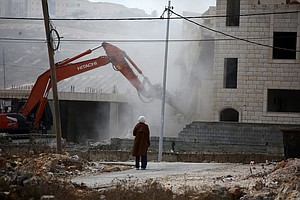
The United Kingdom unveiled sanctions on illegal Israeli settlements in the occupied West Bank and said France and Canada would announce similar penalties later on Tuesday, in a coordinated move that underlined Israel’s growing isolation on the international stage.
Announcing the sanctions in UK Parliament, British Foreign Secretary Ed Miliband issued a strong condemnation of Israel’s actions in the West Bank, saying “settler terrorists” had committed “ethnic cleansing” against Palestinians there and describing the measures as reset in relations between the two countries.
The UK’s announcement was accompanied by a joint letter from 11 Western nations who said they would also introduce similar restrictions on trade with settlements illegal under international law – or would work to support European restrictions. Israel and the Unites States – its most important ally – had threatened to retaliate against Britain for the move.
Miliband, who said he was setting out the measures “as a proud Jew,” said that Britain could no longer simply “call out” injustice and suffering.
“The British government agrees that there is ethnic cleansing of Palestinians in areas of the west Bank, perpetrated by settlers terrorists, and all too often the Israeli government turns a blind eye to this. And worse, members of it have made statements and taking actions to support the forced displacement of Palestinians,” he said.
He added that the UK must now “act” to oppose the expansion of settlement.
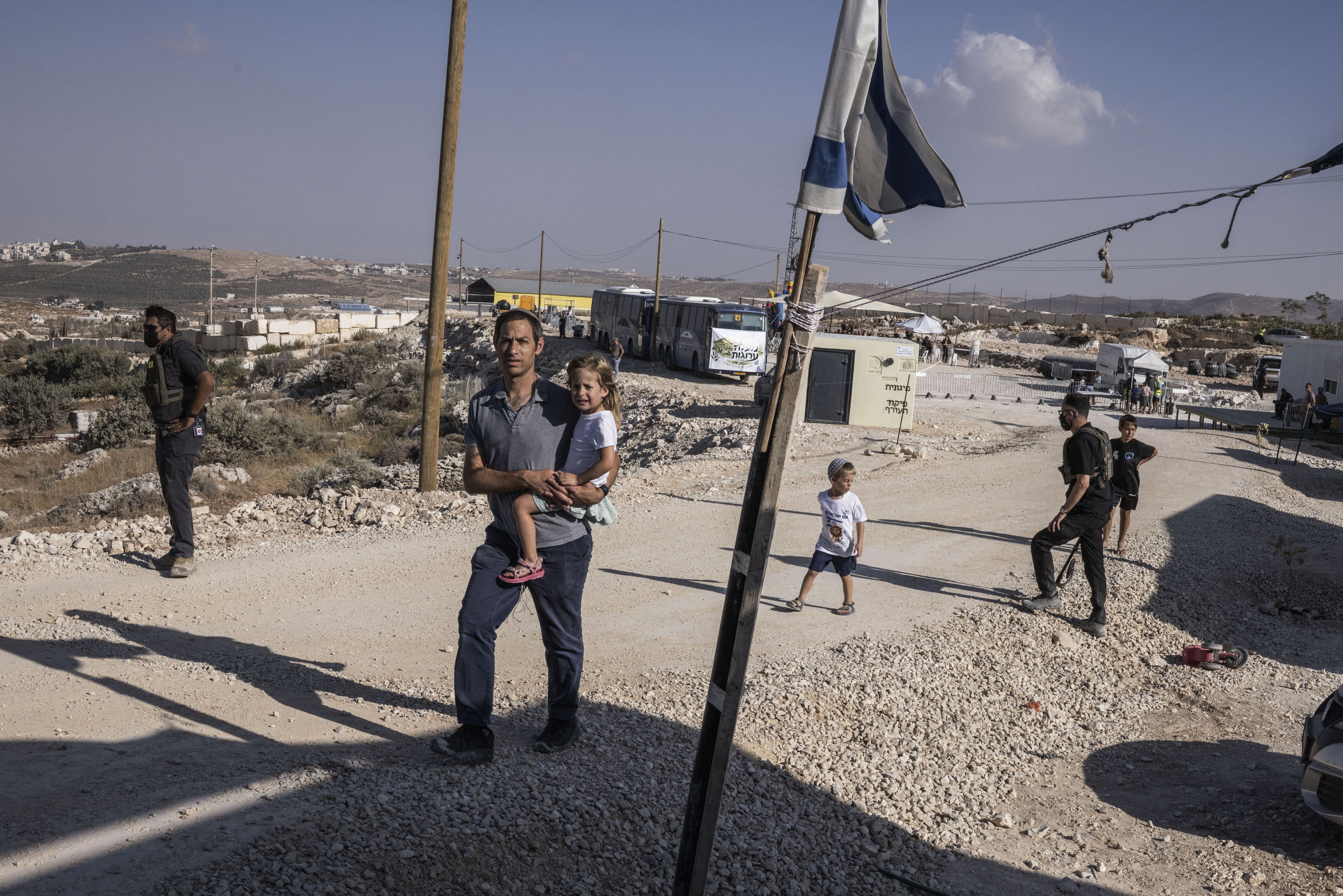
The UK sanctions will ban the import of goods from Israeli settlements in “the illegally occupied” West Bank, will sanction a further set of Israeli settlers and will take action against specific companies and individuals involved in settlement expansion across the construction, infrastructure, finance and real estate sectors, he said.
Miliband said the sanctions were an effort to prevent the destruction of the two-state solution, referring to a peace plan that calls for an independent Palestinian state alongside Israel and what he called a “North star” of British policy.
The issue was raised in a call between UK Prime Minister Andy Burnham and US President Donald Trump on Monday, according to a source familiar with the call.
The UK sanctions could also trigger a response from the Trump administration, with US Ambassador to Israel Mike Huckabee, who has defended Israeli settlements in the West Bank, telling BBC News on Tuesday prior to the announcement, “I think without a doubt there will be (a reaction),” warning it could have a “huge impact on British businesses.”
Earlier Tuesday, Israeli President Isaac Herzog said sanctions would be a “serious error in judgment and choosing the wrong side of history.” At an event marking three decades of relations with the European Union on research and innovation, Herzog said, “Sanctions are not a solution. Dialogue is.”
A significant “reset”
The decision marks a significant clash between Israel and some of its top Western allies and comes amid mounting international criticism over Israel’s policies in the West Bank, where settler violence against Palestinians has surged in areas the international community views as part of a future Palestinian state.
It comes amid Israel’s push to advance the internationally-condemned E1 settlement project, which divides the West Bank into north and south, making a contiguous Palestinian state virtually impossible.
It also splits East Jerusalem – the envisioned capital of a Palestinian state – from the rest of the territory. In late-August, Israel’s Housing Ministry invited bids for the construction of more than 1,200 housing units in E1. The plan aims to create a continuous bloc of Jewish settlements from East Jerusalem to the West Bank.
Israel’s far-right Finance Minister, Bezalel Smotrich, has explicitly championed the expansion of settlement as a way to “bury” the idea of a Palestinian state. “The Palestinian state is being erased from the table not with slogans but with actions,” Smotrich said when E1 received its final approval.
Last year, the UK and others sanctioned Smotrich and far-right Minister of National Security Itamar Ben-Gvir for “repeatedly inciting violence against Palestinians.”
Israel captured East Jerusalem and the West Bank in the 1967 war. Both are considered occupied territories under international law, and Israeli settlements there are widely regarded as illegal.
UK Sanctions on settlement products will likely have little impact on the approximately $8 billion in annual trade between the two countries, only a tiny fraction of which comes from the West Bank. The top UK export to Israel is medicinal and pharmaceutical products, according to its Department for Business and Trade, while the top imports are fruits and vegetables.
In May, the UK was one of several European countries who warned international companies against participating in the construction of E1 because of legal and reputational risks and consequences. The statement, which also had the backing of Canada, Australia and New Zealand, said the situation in the West Bank has “deteriorated significantly” as settler violence has reached “unprecedented levels.”
Last week, Israeli Foreign Minister Gideon Sa’ar told local media that his government would retaliate against the UK if sanctions were imposed.
“If Britain acts against the State of Israel, the State of Israel will act against Britain. We have the tools,” he told Ynet News. “The period is over when people act against the State of Israel and the State of Israel doesn’t respond.”
Israel gave final approval for the E1 plan last year, greenlighting more than 3,400 housing units.
“Every settlement, every neighborhood, every housing unit is another nail in the coffin of this dangerous idea,” he added.
The E1 plan has been accelerated under Netanyahu’s hardline government, which has made settlement expansion a priority. While most Israeli settlements are state-run projects, many settler groups have also established dozens of unauthorized outposts in recent years – often through violence and physical force – that eventual secure Israeli government approvals.
Human rights and monitoring groups, including Amnesty International, have said that Netanyahu’s government turns a blind eye to violence, calling it part of a broader ecosystem of “state-supported settler violence.”