
 57
579/8/2026
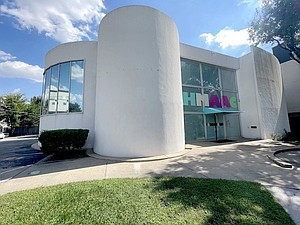
Art can preserve what history might otherwise leave behind. At the Houston Museum of African American Culture this fall, two new exhibitions approach that idea through sound, textiles, family history and memory.
Opening Friday, September 11, Lorenzo Pace: Never Forget Life and Art is to Play and Allie Martin’s Jasper, 1940: A Sound Installation bring two distinct artistic perspectives to HMAAC, exploring Black history and material culture while inviting visitors to engage with stories preserved across generations.
“At HMAAC, we believe every stitch, note, and every recorded voice carries a story worth preserving; these exhibitions are an invitation for our community to reconnect with that legacy and see themselves within it,” said Davinia Reed, HMAAC CEO.
The Art of Inheritance
Curated by Alyssa Mattocks, Lorenzo Pace: Never Forget Life and Art is to Play marks the first institutional solo presentation of artist Lorenzo Pace.
Born in Birmingham, Alabama, in 1943, Pace grew up in Chicago as one of 13 children. His career has crossed artistic disciplines, including visual art, music, storytelling and education. He earned his BFA and MFA from the School of the Art Institute of Chicago and a doctorate in art education from Illinois State University. He has lived and worked in Brooklyn for more than 40 years.
At the heart of the exhibition is an artistic and familial connection. Pace’s mixed-media textile works are presented alongside quilts made by his mother, Mary Alice Pace.
The pairing places Pace’s work within the broader tradition of Black quiltmaking in America. The quilts of Gee’s Bend serve as an important point of reference, particularly in their use of available materials, repetition and improvisational composition.
For Pace, textiles become a place for experimentation. Working with fabric and found materials, he cuts, layers, pieces and assembles fragments into new forms. His idea of “play” describes an intuitive relationship with materials, allowing objects and pieces to accumulate, shift and develop new meanings.
Music also informs that approach. Music has long accompanied quilting in Gee’s Bend, particularly spirituals and gospel singing. As a musician, Pace brings an awareness of rhythm, variation and play to his work.
Presented together, Pace’s works and his mother’s quilts create an intergenerational conversation about Black quiltmaking, inheritance and invention.
Pace is best known for Triumph of the Human Spirit (2000), the memorial sculpture commissioned for the African Burial Ground in Lower Manhattan. He has exhibited internationally, including in Brazil, China and France, as well as at the Birmingham Civil Rights Institute.
When Sound Becomes Memory
Where Pace works with cloth and found objects, Allie Martin works with something less tangible: sound.
Curated by Maleke Glee, Jasper, 1940 is a motion-activated sound installation that asks visitors to listen slowly and intentionally to Black sound.
Martin draws on materials from the Library of Congress to construct layered soundscapes from interviews with two brothers from Jasper, Texas. The installation responds to visitor movement, making each experience different.
The history at its center reaches back to 1940, when Billy McCray, a formerly enslaved man, was interviewed in Jasper by folklorist John Lomax. Lomax repeatedly asked McCray to sing until he relented and performed the ship song “Blow, Cornie Blow.”
The recording is held in the Library of Congress’ Voices Remembering Slavery Collection and became a touchpoint for Martin during a 2023–25 residency.
Martin’s installation brings McCray’s recording into a call-and-response with recordings of his descendants made on Juneteenth 2025. The work also incorporates a 1937 interview with McCray’s brother, C.B., who recounted an enslaved man being punished for improperly stacked firewood before escaping into the woods.
Martin reimagines that escape as fugitivity, a flight toward safety beyond the reach of surveillance.
“I’m honored to be working with Maleke Glee and HMAAC to amplify Jasper’s important histories. The show invites us to listen together to not only what has been, but what could be,” Martin said.
Martin will discuss the installation and her creative process during an artist talk at 2 p.m. Saturday, September 12, at HMAAC.
Experience the Exhibitions
The opening reception for both exhibitions will take place from 6 to 8 p.m. Friday, September 11 at the Houston Museum of African American Culture, 4807 Caroline Street.
Both exhibitions will remain on view through Thursday, December 10. Admission is free.
HMAAC is open Wednesdays through Saturdays from 11 a.m. to 6 p.m., with the last exhibition entry at 5:30 p.m.
The Houston Museum of African American Culture is dedicated to collecting, conserving, exploring, interpreting and exhibiting the material and intellectual culture of Africans and African Americans in Houston, the Southwest and throughout the African diaspora. Through exhibitions, programs and education, HMAAC invites visitors to engage with African American history and culture through curiosity, dialogue and discovery.