
 57
10/20/2026
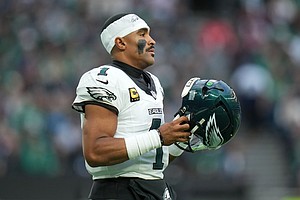
At just 28 years old, and only 20 months removed from being named the Super Bowl MVP, Jalen Hurts is now on blood thinners to stave off what – without them – could be life-threatening blood clots in his lungs.
The Associated Press and others are reporting that the Philadelphia Eagles quarterback won’t play again this season, which would appear an obvious outcome since treatment for Hurts’ injuries – bilateral pulmonary emboli and deep vein thrombosis in medical jargon – requires three months on the blood thinners.
That much everyone can agree on. It is everything in between that makes the situation less cut-and-dry.
The Eagles, in conjunction with Hurts’ agent Nicole Lynn, have released two statements in the past four days detailing Hurts’ injury and treatment, citing the “interest of transparency.”
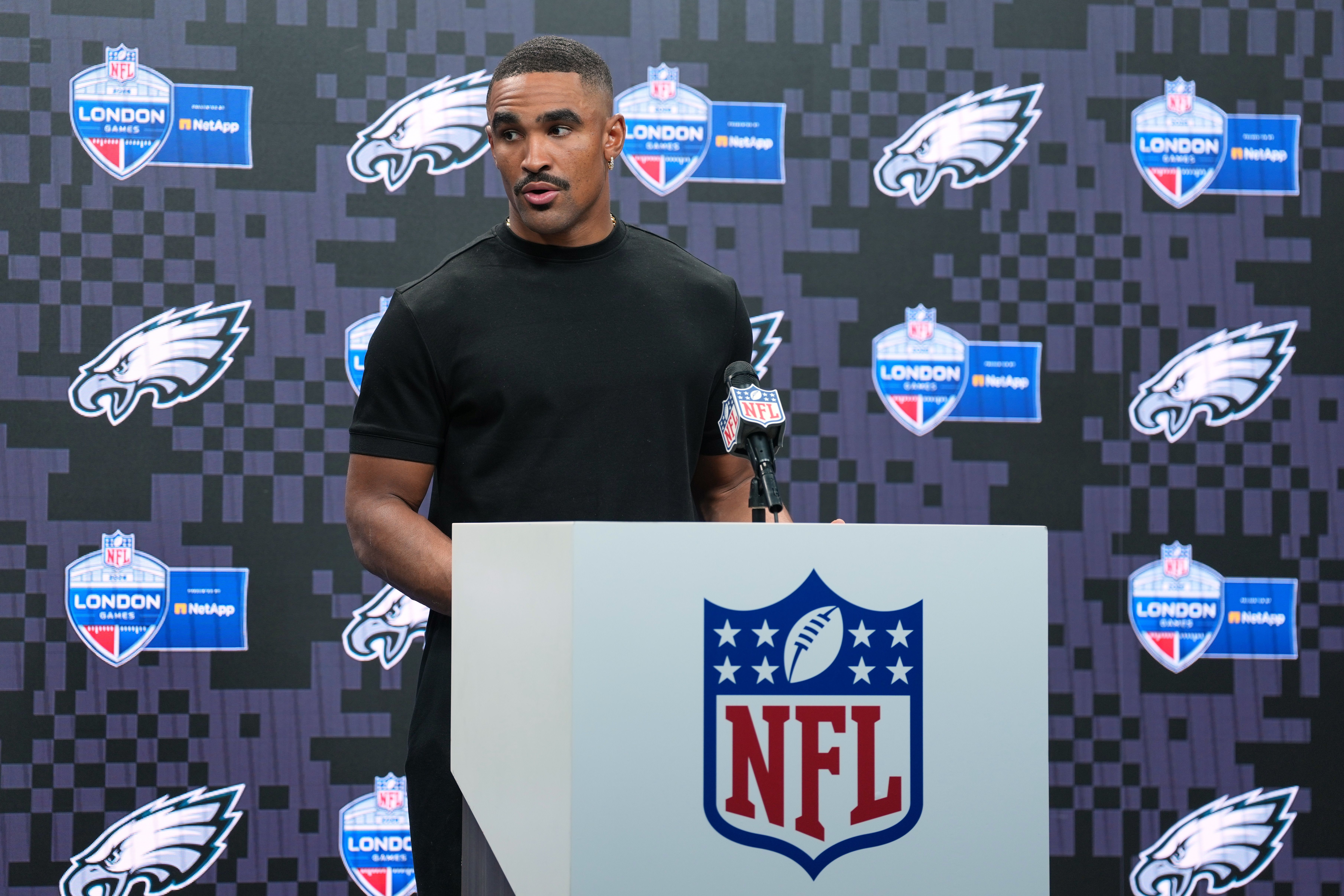
The timeline breaks down like this:
On October 8, four days after the Eagles lost to the Rams, the quarterback told his training staff that he had suffered a calf injury during the game after being kicked in the leg.
He subsequently practiced the next day and then took a transatlantic flight to London for the Eagles’ game against Jacksonville.
Upon landing, he received an ultrasound, revealing a superficial blood clot in his leg. The Eagles released a statement detailing the lead-up to the diagnosis and said that the doctors “concluded that activity and movement were important.”
Though not substantiated by the team but as reported by ESPN, Hurts stayed in the hospital and returned to the hotel at 3 a.m. after the ultrasound. The Eagles kicked off at 2:30 p.m. local time.
Hurts played in the game against the Jaguars – though Philly.com reporter Jeff McLane said on X that Hurts took the field noticeably later than his teammates and said afterward he needed to “rest.”
After the loss, Hurts flew back with his team to Philadelphia.
After receiving treatment for two days and practicing on Wednesday, October 14, Hurts had another ultrasound, which indicated “small movement” in the blood clot. The Eagles announced on October 15 that he would not play in the Birds’ upcoming game against Carolina.
On October 17, the organization downgraded Hurts’ status, placing him on injured reserve.
On Monday, Lynn and the team shared the statement revealing that the blood clots had traveled from Hurts’ leg to his lungs.
Left unanswered are two critical issues.
For starters, why was Hurts permitted to fly across the Atlantic twice? Along with injury, as in Hurts’ case, deep vein thrombosis can be caused by extended periods sitting on long flights, pulmonary critical care expert Dr. Parth Rali told CNN. The International Air Transport Association guidelines stipulate that “travelers with a recent DVT of the legs may fly once they are asymptomatic and stable on anticoagulants.”
A bigger question, though, is why was Hurts permitted to play in the game at all?
At best, he was coming off a handful of hours of rest after a stressful night in the hospital. At worst, he was competing with a serious medical condition.
During his normally scheduled Monday news conference, Eagles head coach Nick Sirianni did not go into detail about either decision, only repeatedly saying that he trusted his medical team and that “it’s not just me that cares deeply about our players, it’s them as well.”
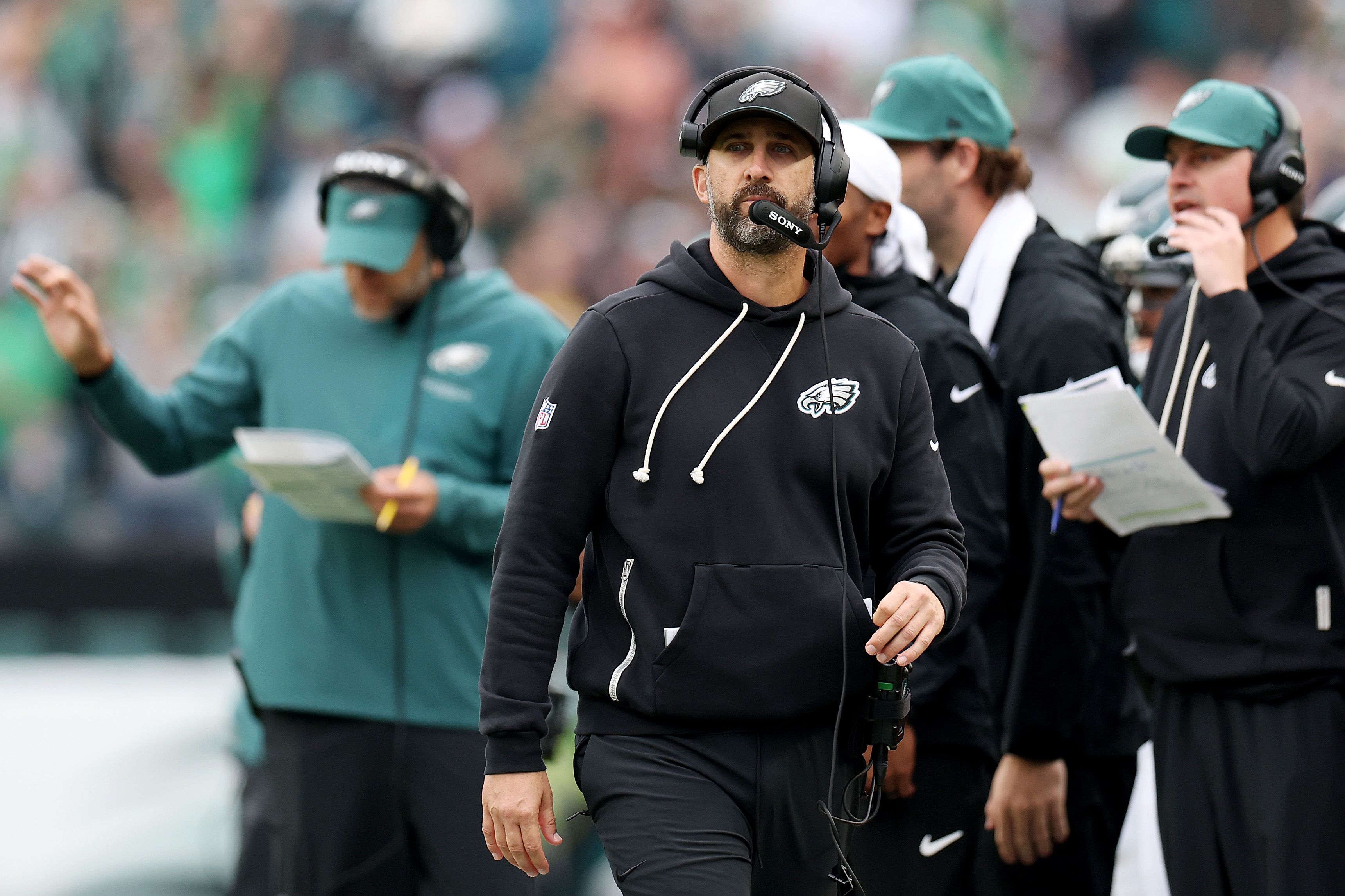 01 Nick Sirianni 1004
Sirianni added that this was the same medical team that “helped 21 of 22 guys be available for the Super Bowl.” Asked how Hurts was feeling, the coach said he would keep his private conversations private.
“But I haven’t been without him for an extended period of time,” Sirianni said. “I miss him.”
As Sirianni spoke on a live-streamed interview, the chat box down the right side of the video erupted with unanswered questions. Even before the announcement about Hurts, Sirianni and the Eagles were on a short leash with their notoriously hard-to-please fan base. Philadelphia has lost four games in a row, the team’s worst skid in Sirianni’s six seasons.
Along with the usual “fire Sirianni” suggestions, fans directed their ire at Eagles owner Jeffrey Lurie and general manager Howie Roseman, who did not make themselves available for comment. Some called them cowards; others opted for more colorful language.
Most, however, questioned whether Hurts’ safety had been sacrificed in the name of the sport.
“Super Bowl MVP has been done wrong,” one wrote.
Added another, “Players’ health is at the forefront of our mind? Obviously not.”
Still another simply called the decision “shameful” and wondered who “put his life at risk.”
Deep vein thromboses, while rare, are not entirely uncommon among athletes. In February 2020, San Antonio Spurs star Victor Wembanyama was diagnosed with one in his shoulder, undergoing immediate surgery to prevent it from spreading to his lungs.
Brandon Ingram was shut down with a DVT in his shoulder in 2019 and Serena Williams was hospitalized with multiple pulmonary embolisms in her lungs, the result of a blood clot forming after she cut her foot.