
 57
575/18/2026
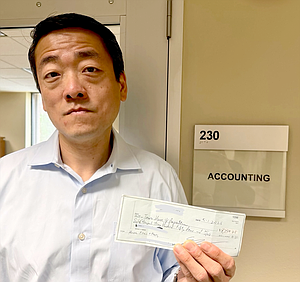
In a resounding affirmation of democracy, constitutional balance, and the power of the people’s vote, the all-Republican Texas Supreme Court unanimously rejected an aggressive attempt by Governor Greg Abbott and Attorney General Ken Paxton to remove Democratic State Representative Gene Wu from office following the dramatic 2025 legislative walkout.
The ruling sends a thunderous message across Texas and beyond: elected officials cannot simply be erased because those in power dislike dissent.
For Houstonians and defenders of democracy, the decision marks a critical victory for constitutional guardrails, separation of powers, and the sacred principle that voters — not political vendettas — determine who represents them.
A Political Showdown That Tested Texas Democracy
The controversy stems from the 2025 Texas legislative special session, when more than 50 Democratic lawmakers, led by Gene Wu, left the state to break quorum and temporarily block Republican-backed congressional redistricting maps widely criticized as politically engineered power grabs.
Rather than relying solely on the Texas House’s internal disciplinary tools, Abbott and Paxton escalated the conflict into an unprecedented legal offensive. Their argument? That lawmakers participating in the walkout had effectively “abdicated” their offices and should be removed through judicial action.
But the Texas Supreme Court firmly rejected that theory.
Chief Justice Jimmy Blacklock wrote that the judiciary should not intervene in disputes that the Legislature itself has constitutional authority to resolve. The court emphasized that the Texas House already possesses mechanisms to compel attendance and discipline absent members.
Translation: the courts are not political weapons for governors seeking to silence opposition.
Harris County Pushes Back Against Political Overreach
Leading the charge in defense of constitutional integrity was the Harris County Attorney’s Office, which filed an amicus brief opposing the effort to remove Wu.
Harris County Attorney Jonathan Fombonne praised the ruling as a necessary defense of democratic institutions and constitutional boundaries.
 HCA Logo Icon Navy
“The Texas Supreme Court’s unanimous decision reaffirms a fundamental principle of our democracy,” Fombonne stated. “Elected officials cannot be removed from office through political disagreement or by bypassing the legal limits set by our Constitution and state law.”
That statement resonated deeply in Houston, where communities have increasingly voiced concerns about political extremism, attacks on voting rights, and efforts to consolidate power at the expense of democratic norms.
Gene Wu Emerges as a Symbol of Democratic Resistance
For many Texans, Gene Wu’s leadership during the quorum break transformed him from a legislative figure into a statewide symbol of resistance against what critics call escalating authoritarian tactics in Austin.
Supporters argue that Wu and fellow Democrats used one of the few constitutional tools available to challenge controversial redistricting efforts they believed diluted minority voting power and undermined fair representation.
While Abbott and Paxton attempted to portray the walkout as dereliction of duty, the Supreme Court effectively reminded Texas leaders that political disagreement is not grounds for political erasure.
That distinction matters.
Democracy was never designed to be comfortable. It was designed to protect debate, dissent, and representation — especially when power becomes concentrated.
Abbott and Paxton Face Growing Criticism
The failed attempt to remove Gene Wu is likely to intensify criticism surrounding Abbott and Paxton’s increasingly aggressive use of state power.
Critics across Texas argue that the legal maneuver represented a dangerous precedent — one that could have allowed future governors to weaponize the courts against political opponents whenever legislative conflict arises.
Even more striking is that the rebuke came from a conservative Texas Supreme Court, not a liberal tribunal. The unanimous ruling underscores how far-reaching and legally fragile the removal effort appeared.
For many observers, the court’s decision wasn’t simply a victory for Gene Wu — it was a warning against executive overreach.
Houston’s Voice in the Fight for Democracy
Houston has long stood as one of Texas’ most diverse and politically engaged cities, and this ruling reinforces the region’s growing role in defending democratic participation, voting access, and representative government.
As debates over redistricting, voting rights, and political power continue nationwide, the Gene Wu case may ultimately be remembered as a defining moment when constitutional boundaries held firm against political pressure.
And for Houstonians watching closely, one message rings louder than ever:
Democracy still matters. The voters still matter. And no politician — regardless of title — stands above the Constitution.