
 57
576/4/2026
At the top of the Obama Presidential Center, in its sunlit Sky Room is where you’re meant to take it all in. The panoramic views are impressive: Surrounding the campus is Chicago’s South and West Sides, as well as the ultramarine of Lake Michigan. But, more than that, it’s a moment to pause after scaling several floors of history and Barack Obama’s political legacy — not-too-distant memories for many.
Overhead, a monumental artwork by the artist Idris Khan gives the illusion of continued ascent. Words from President Obama’s famed remarks in Selma, Alabama, are stamped and overlapping, sloping upwards as a swath of blue until they reach a rim of light. In Selma, and elsewhere, the former president often spoke about collectively shaping destiny. And that seems to be the final note as you climb up through the museum: the unwritten, wide-open future.
On June 19, coinciding with Juneteenth, the highly anticipated center will finally open to the public. It’s been in the works for more than a decade, and cost $850 million to build — a number that kept growing, becoming by far the most expensive presidential library in history.
That’s because it’s not just a single building. Instead, it’s an entire campus, designed by the architects Tod Williams and Billie Tsien, and featuring 28 new, site-specific installations from some of the most important artists today. The design shifts the traditional concept of an archival presidential library into a sprawling 19.3-acre campus that offers a museum, community events, a fruit and vegetable garden, NBA regulation-sized basketball court, and a new branch of the Chicago Public Library.
In the lead up, the former president has done a promotional gauntlet, playing Wordle with Stephen Colbert, squashing his beef with NBA star Anthony Edwards (for now); and wishing folks a Happy Star Wars day alongside Mark Hamill (who played Luke Skywalker) in front of the center — perhaps a sly response to one of its nicknames, the “Death Star.” The museum’s weighty granite design has also been called the “Obamalisk,” sometimes disparagingly, othertimes fondly.
CNN got an early look at the center this week during its soft opening period, as it welcomed community members as its first guests. Already, the campus bustled with activity, even as final construction, landscaping, and art installations continued. School kids arrived on field trips and groups lined up for exhibitions, taking the escalators up past the abstract artist Julie Mehretu’s vibrant, 83-foot-tall vertical window.
Tsien said it had been emotional to watch visitors fill the campus. “You have a sense when people walk in, they look up and they feel like it belongs to them, like it’s theirs,” she said during an interview at the center’s Forum building.
Major transformations
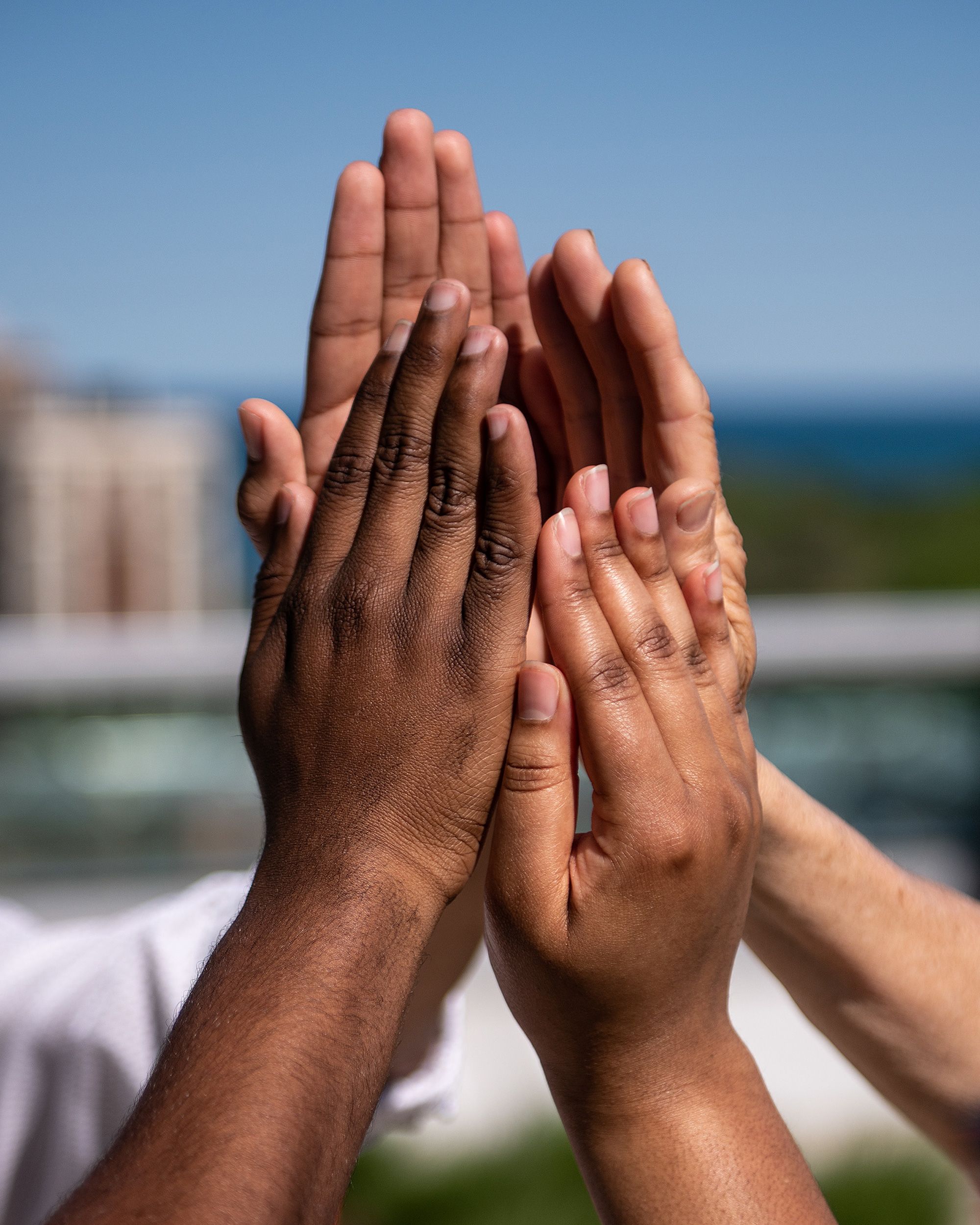
Despite the colorful comparisons, Williams and Tsien based the museum’s shape on a visual of four hands coming together, promoting the idea that many hands shape a place, according to the center. “I don’t care about the names,” Williams said. “I think we only care about what it is and what it does and what it will be in the future.”
“We think of it as a 500-year building, so every decision that was made was really about making something that felt lasting and timeless,” Tsien added.
Whatever you see in the Brutalist-esque building, the center is poised to become a major cultural institution and destination. Breaking with tradition, it’s also run privately by the nonprofit Obama Foundation instead of the National Archives and Records Administration (NARA). The presidential archive itself, run by NARA, will be made fully digital for the first time, which meant digitizing some 30 million pages, per the Obama Foundation. Parts of the archive are on display at the museum.
Not all of these changes — nor the price tag — have been embraced. There have been ongoing concerns about its impact on gentrification on the South Side, and the location itself was in dispute as well. It is embedded within the city’s historic Jackson Park, a decision that was met with legal battles as an environmental group sued the City of Chicago for allowing a private project to be built on public land. The lawsuit was eventually dismissed.
Though the center added a total of 3.7 acres to the park, parts of it also fell victim to the construction, including the removal of hundreds of trees and its historic Women’s Garden from 1937, which was demolished but has been reimagined for the new campus. In a presentation at the center on Wednesday, Obama Foundation CEO Valerie Jarrett emphasized the outdoor recreational opportunities they’ve offered from the start, with an athletic field built before the main plazas and buildings, as well as the gardens and other green spaces (including a sledding hill) that they’ve cultivated since.
“We’ve had thousands of community meetings to ensure that this campus was going to blend into the urban fabric, that the people who live proximate to this center would feel the sense of ownership and participate with us in developing the plans for it,” she said.
Markers of the Obama era
Inside the museum, there are exhibitions dedicated to the former president’s political legacy, the former first lady’s public initiatives, and historical movements, such as Civil Rights and Women’s Suffrage, that shaped them both. Displays show campaign ephemera and memorabilia, from Shepard Fairey’s iconic HOPE poster to children’s drawings. A video that follows the grassroots efforts of the 2008 election cycle counts down to the transformative political moment with campaign trail footage capturing the efforts of volunteers.
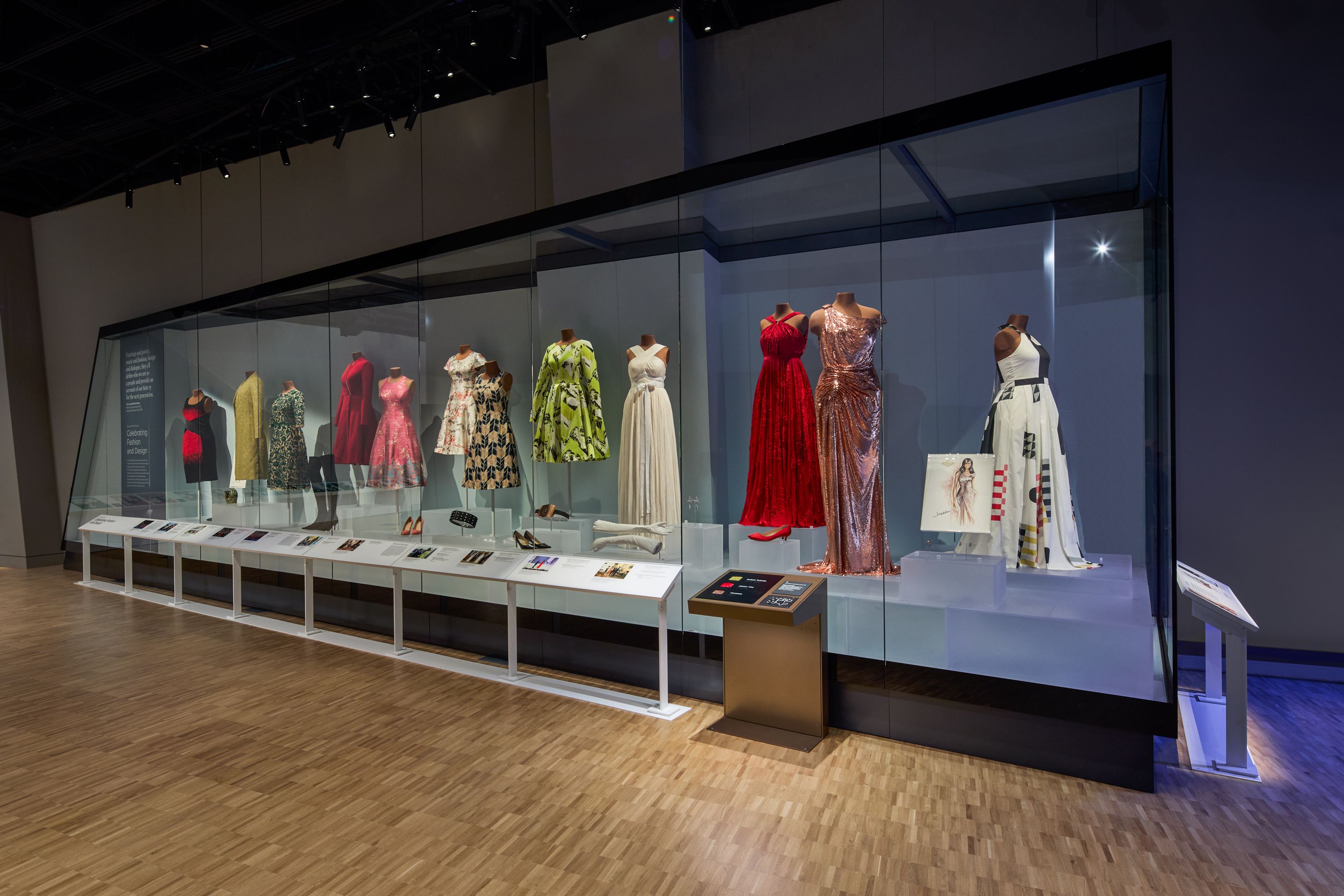
But visitors will also see how the Obamas influenced design, style and culture. That includes some of Michelle Obama’s iconic looks, such as the greenish-gold coat and dress designed for her by the late Isabel Toledo on Inauguration Day in 2009, and the gown she wore designed by Michelle Smith of the label Milly as she sat for Amy Sherald’s painting in the National Portrait Gallery. (Not included was the former president’s equally iconic tan suit, which Jarrett said he gave away).
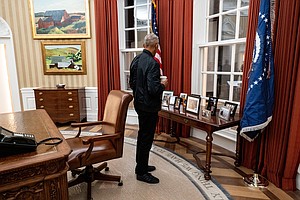
There’s also a full-scale replica of the Oval Office where visitors can sit at the desk. While Obama is not the first to feature a replica of this kind in a presidential library, with George W. Bush, Ronald Reagan and Jimmy Carter among others following the tradition, it does stand out at a time when today’s Oval Office has dramatically shifted in taste and style. It’s gone from understated to overgilded during the Trump presidency.
When the room was still under construction, the former White House interior designer Michael Smith got a teary-eyed first glimpse of it in March, in a video posted by the Obama Foundation.
“I did not think that would be emotional,” he said, pausing to take it in.
Ambitious art everywhere
Across the campus, 30 artists have created an array of site-specific permanent works on a scale that would even be challenging for a leading contemporary art institution.
Curated by the former Arts in Embassies deputy director Virginia Shore, the collection brings both leading and lesser-known contemporary artists in conversation with each other, many with deep connections to Chicago. Numerous works are on a grand scale, including Mark Bradford’s enormous tactile painting of the city, Nick Cave and Marie Watt’s nearly two-story beaded and jingle-adorned tapestry; and Martin Puryear’s arcing outdoor sculpture paying tribute to Martin Luther King Jr.
Others are more serendipitous encounters, such as Richard Hunt’s sculpture of a bird taking flight from a book in a quiet courtyard by the library, or a mosaic by Rashid Johnson of the center’s Teaching Kitchen, next to a fruit and vegetable garden.
The artist Theaster Gates, who has paid tribute to Black life and Black beauty in the center’s Forum building with a frieze of archival images from Ebony and Jet magazines, is also a neighbor to the center with his cultural revitalization projects through the Rebuild Foundation. In an exclusive interview late last year, he told CNN: “I hope that when people come to the center they come with an open heart about the future of democracy, collective imagining, collective storytelling and collective belief.”
Together, the artists “really help to tell a story about community, about convening, about the power of art to activate and energize people,” said the museum’s director, Louise Bernard.
“This has been an opportunity for them to really lift up a sense of hope that is embedded in their work, and so we see pieces that are truly captivating in their sensibility,” she added. “They are about the power and place of Chicago. They’re about the idea of different voices and practices coming together. They’re about memory and place and the power of color to transport people.”