
 57
577/14/2026
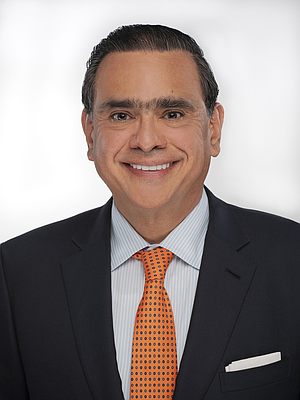
For more than three decades, Houston attorney Jacob “Jake” Monty has built a career where immigration law, employment law and the American promise meet—sometimes neatly and sometimes with all the grace of rush-hour traffic on the Gulf Freeway. Yet the fatal shooting of Lorenzo Salgado Araujo by a U.S. Immigration and Customs Enforcement officer on July 7, 2026, has left even this seasoned lawyer searching for words.
“This is tragic for Houston, for Texas and for America,” Monty said.
Salgado Araujo, 52, had lived in the United States for approximately 35 years, raised three sons and worked as a homebuilder. On the morning he was killed near Canal Street and Wayside Drive in Houston’s Magnolia Park neighborhood, he was reportedly picking up members of his construction crew. His family says he had no criminal record and was attempting to obtain lawful immigration status. Federal authorities later acknowledged that he was not the person officers originally intended to apprehend.
“He was in Houston for more than 35 years, working on his legal status and following the rules to fix it,” Monty said. “He was a husband and father to three sons who lived all their lives in Houston.”
What happened during the critical moments before the shooting remains disputed.
The Department of Homeland Security maintains that Salgado Araujo rammed a government vehicle and threatened an officer with his van. Attorneys representing men who were riding with Salgado Araujo have offered a sharply different account, alleging that the gunfire was unprovoked. No body-camera footage exists, and federal authorities had not publicly identified the agents involved as of July 14.
Those unanswered questions have transformed a family tragedy into a much larger test of transparency, constitutional accountability and public trust.
Monty’s concern is not that immigration laws should disappear. His argument is that enforcement within a democracy must remain recognizable as legitimate law enforcement: clearly identified officers, professional tactics, proportional force, reliable evidence and meaningful independent review.
A badge—whether federal, state or local—is not a substitute for accountability. It is a responsibility to it.
Houston Mayor John Whitmire and Houston Police Chief Noe Diaz have called for a timely, transparent and thorough investigation. Harris County District Attorney Sean Teare has also launched an independent inquiry while criticizing the federal government’s lack of cooperation. The Department of Homeland Security Office of Inspector General is conducting its own review.
These investigations matter because democracy is not measured only by elections, campaign speeches or patriotic slogans. Democracy is also measured by what government does when its own power is questioned.
Monty additionally challenges the political shorthand that portrays undocumented immigrants as one enormous criminal class. As of April 4, 2026, approximately 70.8 percent of people held in ICE detention had no criminal conviction, according to Syracuse University’s Transactional Records Access Clearinghouse.
“These are neighbors taking their families to church, putting their children through school and contributing to our city as workers and taxpayers,” Monty said.
The economic picture is equally inconvenient for anyone shopping for an easy villain.
The Institute on Taxation and Economic Policy estimates that undocumented immigrants paid $96.7 billion in federal, state and local taxes during 2022. That included $37.3 billion paid to state and local governments and approximately $15 billion in sales and excise taxes.
In other words, people without permanent legal status still help finance roads, schools, emergency services and the communities in which they live.
Monty’s own journey is stitched into Houston’s working-class and immigrant history. One of seven children raised in El Paso, he earned his bachelor’s degree at the University of Texas at Arlington. A $500 scholarship brought him to the University of Houston Law Center, where he graduated in 1993. He later founded Monty & Ramirez LLP and received presidential and gubernatorial appointments, including service on the University of Houston System Board of Regents and federal border-development institutions.
That biography helps explain his continued belief that immigration reform remains possible.
The Immigration Reform and Control Act of 1986 created legalization opportunities for certain undocumented residents and agricultural workers. Nearly 40 years later, congressional stalemate has left families, employers, courts and enforcement agencies navigating a system almost everyone admits is outdated.
Salgado Araujo’s death must not become another headline that disappears after the flowers wilt. It should become a civic turning point—an insistence on facts, body cameras, identifiable officers, independent investigations, due process and comprehensive immigration reform.
Houston has always been a city that builds—homes, businesses, families and second chances.
Honoring Lorenzo Salgado Araujo now means building something harder but more enduring: a system of justice strong enough to enforce the law and humble enough to answer for how that power is used.
For Houston Style Magazine, that is not a partisan demand.
It is an American one.