
 57
577/13/2026
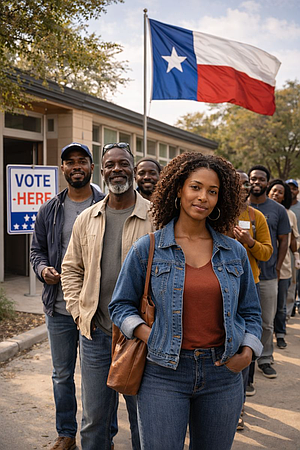
America turned 250 on July 4, 2026, marking two and a half centuries since the signing of the Declaration of Independence. The official America250 observance invited the country to reflect on its past, honor the contributions of all Americans and imagine a stronger future. For Black families, however, this anniversary cannot be reduced to fireworks, flags and a birthday cake large enough for 50 states. It must also become an honest family meeting about the promise, progress and unfinished business of American democracy.
The Declaration proclaimed equality in 1776, but millions of Black people were denied liberty, citizenship and legal protection for generations. In August 1619, the White Lion brought captive Africans to Point Comfort in English-occupied Virginia—one of the defining beginnings of the Black experience in what became the United States. They arrived with names, families, skills, faith, intelligence and dreams, even as an emerging system attempted to reduce human beings to property.
Yet Black history is not simply a record of what America did to Black people. It is also the record of what Black people did for America.
Black labor helped build the nation’s wealth. Black soldiers defended American freedom, even when freedom did not fully defend them. Black churches sheltered movements, Black teachers opened minds, Black entrepreneurs created opportunity, and Black families turned survival into strategy.
During Reconstruction, newly freed citizens demanded a broader democracy grounded in racial equality. The 15th Amendment extended voting rights to Black men in 1870, although poll taxes, literacy tests, intimidation and Jim Crow later stripped that promise from millions. The Voting Rights Act of 1965 became a landmark federal response to that long betrayal.
That history answers the central question: America 250 means Black families have earned more than an invitation to the celebration. We are co-authors of the American story.
Houston knows that truth. From neighborhood churches and family businesses to Texas Southern University and Barbara Jordan—the Fifth Ward daughter who carried her commanding constitutional voice into Congress—Black leadership has continually strengthened both community and country.
But authorship carries responsibility. The next chapter must be written through education, voting, entrepreneurship, home and land ownership, mentorship, family stability and informed civic participation.
Democracy is not a spectator sport, and progress does not arrive by same-day delivery.
Communities gain influence when they organize, attend public meetings, study policy, support responsible institutions, question elected officials and prepare young people to lead.
This is the peaceful revolution America 250 should inspire: a revolution of reading, building, investing, voting and remembering. It should include serious discussion of the lasting economic consequences of slavery and discrimination, along with practical policies that expand opportunity, protect civil rights and help families create generational wealth.
Accountability must apply to government, corporations, schools, political parties—and to us.
Not every Black family will interpret America 250 in exactly the same way. That diversity of thought is itself part of democracy. Still, common ground remains: our history deserves truth, our children deserve preparation, our communities deserve investment, and our votes deserve protection.
For Black America, the 250th anniversary should be both celebration and summons. We may honor the nation without pretending its history was perfect. Honest patriotism loves America enough to tell the truth, and courageous democracy believes America can still improve.
Our ancestors survived conditions designed to erase their future. The task before this generation is not merely to inherit their resilience, but to convert it into lasting power and shared prosperity.
America 250 asks what kind of nation enters its next 250 years. Black families should answer clearly: one where our history is taught, our voices are heard, our businesses are supported, our children are prepared and our humanity is never negotiable.
The previous chapters were too often written about us.
This next one must be written by us.
Texas Democratic Black Caucus

“Honoring Our Past. Empowering Our Future. Building the Next Generation of Leadership.”
Facebook: @TXBlackDems
X: @TXBlackDems
Instagram: @TXBlackDems
Threads: @TXBlackDems
TikTok: @TXBlackDems