57
577/7/2026
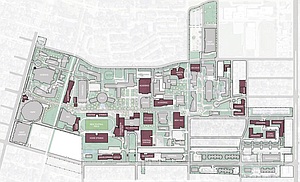
Texas Southern University (TSU) is not simply planning buildings. It is planning a future worthy of its past.
On July 7, 2026, TSU launched a comprehensive Campus Master Plan outlining approximately $1.7 billion in long-term capital priorities and more than 20 phased projects over the next decade. For a university preparing for its Centennial, this is not just brick, glass, concrete, and campus maps. This is a declaration: the Tigers are not tiptoeing into the next century. They are marching, drumline ready.
The plan supports TSU’s Ascend 2030 strategy, aligning campus growth with student success, workforce preparation, research expansion, community engagement, and institutional effectiveness. TSU’s strategic plan is built around “Renew, Enhance, and Expand,” with core focus areas including student achievement, academic research, operational excellence, and technology and artificial intelligence, according to the university’s Ascend 2030 framework.
President J. W. Crawford III framed the Master Plan as a disciplined, flexible guide for growth. “As Texas Southern University moves forward, it is important that investments in facilities and infrastructure support projected outcomes,” Crawford said. “The Master Plan aligns physical development with institutional strategic priorities, providing a stable framework that can be expanded over time.”
For Houston, that matters. TSU sits in the heart of Third Ward, but its impact has never been confined to campus boundaries. Founded in 1927 as Houston Colored Junior College, TSU grew from a segregated education system into one of America’s essential historically Black universities. Its evolution includes Houston College for Negroes, Texas State University for Negroes, and, after students petitioned the Legislature, Texas Southern University in 1951, according to TSU’s official history and legacy page. That is not just history. That is testimony.
Now, nearly 100 years later, the university is preparing to build for the students who will lead Houston, Texas, and the nation through the next 100.
Several projects are already moving from vision board to construction reality. Three new academic and research facilities, the interconnected Catalyst for Urban Transformation, the Nabrit Science Center, and the Health and Wellness Center, are expected to begin construction later this year. Supported by more than $95 million in state funding, all three are expected to open during TSU’s Centennial year.
Also advancing is planning and design for a proposed new Thurgood Marshall Law Center, supported by a $10 million legislative allocation in collaboration with the Texas Facilities Commission. For a law school whose history is tied to Heman Sweatt’s fight against segregation in Texas legal education, that investment carries a special kind of weight. Some buildings house classrooms. Others carry a movement.
The Master Plan also prioritizes student-centered facilities, academic and research infrastructure, residential and recreational amenities, and spaces that better connect TSU with the broader Houston community. Translation: the future campus is being designed not only to look better, but to work better.
“Houston and Texas continue to grow, and Texas Southern must leap ahead of that growth,” Crawford said. That is the right spirit. Because when TSU grows, Houston gains more than square footage. It gains nurses, lawyers, researchers, entrepreneurs, public servants, educators, scientists, artists, and civic leaders.
For nearly a century, Texas Southern University has turned obstacles into opportunity and students into history-makers. With this Master Plan, TSU is making clear that its Centennial will not be a finish line. It will be a launchpad.