
 57
577/7/2026

Democratic gubernatorial candidate Gina Hinojosa unveiled an economic proposal in Houston on Tuesday that would provide $1,500 payments to every Texas household, arguing the state should use a portion of its multibillion-dollar Rainy Day Fund to help families struggling with the rising cost of living.
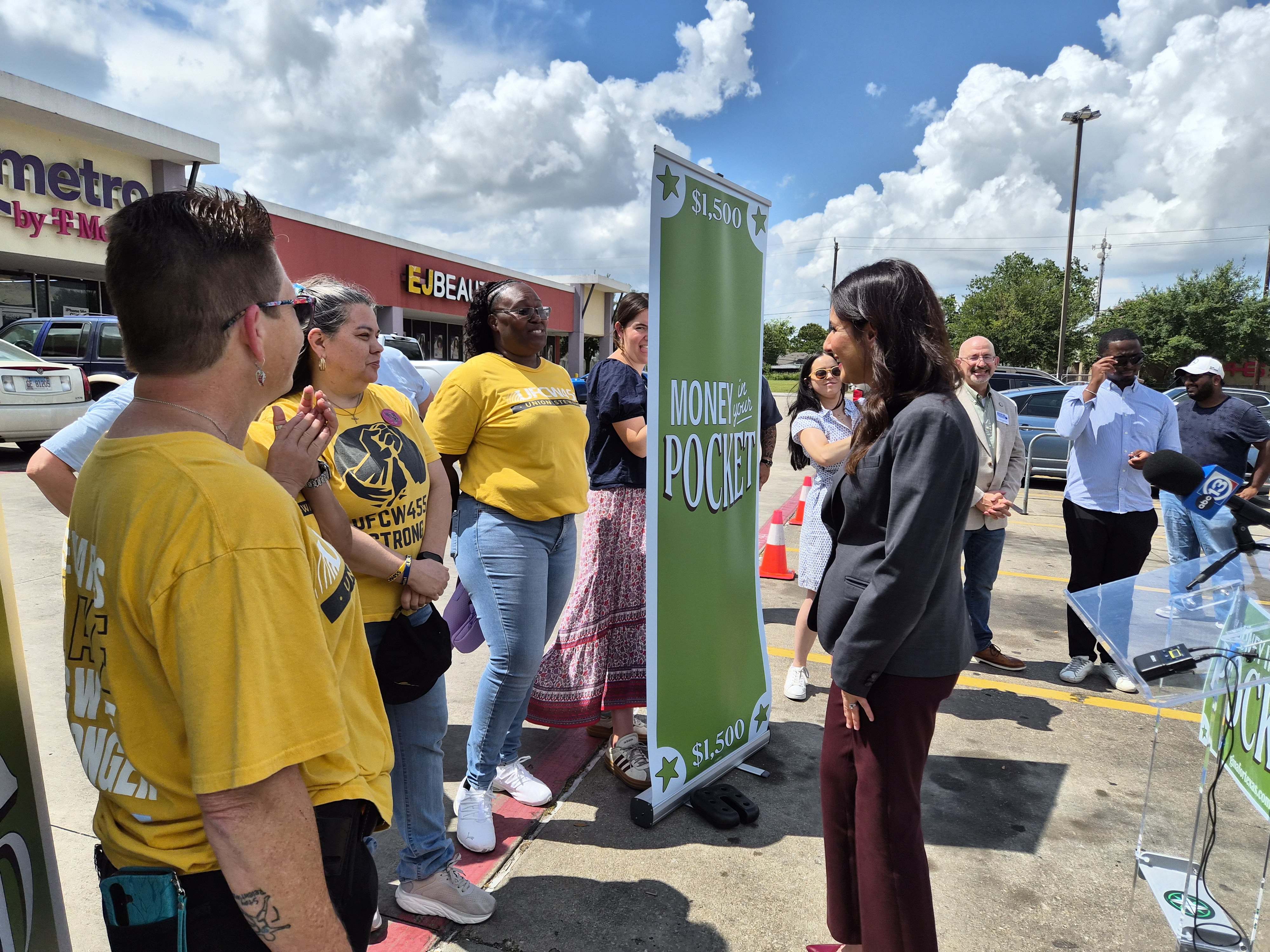 Gina Hinojosa in Houston, TX
Hinojosa announced the proposal during a campaign stop at Pyburn’s Farm Fresh Foods on Scott Street in Houston, a grocery store that opened in 2018 in an area that had long been considered a food desert. The location highlighted one of the campaign's key issues: expanding access to affordable groceries while addressing the financial pressures facing families across Texas.
During the event, Hinojosa acknowledged the rising cost of groceries and the growing challenge of food access in both urban and rural communities. While inflation has driven food prices higher, many rural communities have also lost locally owned grocery stores because of increasing operating costs, shrinking profit margins and reductions in federal Supplemental Nutrition Assistance Program (SNAP) benefits that affect purchasing power in many small towns.
The closure of neighborhood grocery stores has forced many Texans to travel farther for basic necessities, increasing transportation costs and making access to fresh food more difficult.
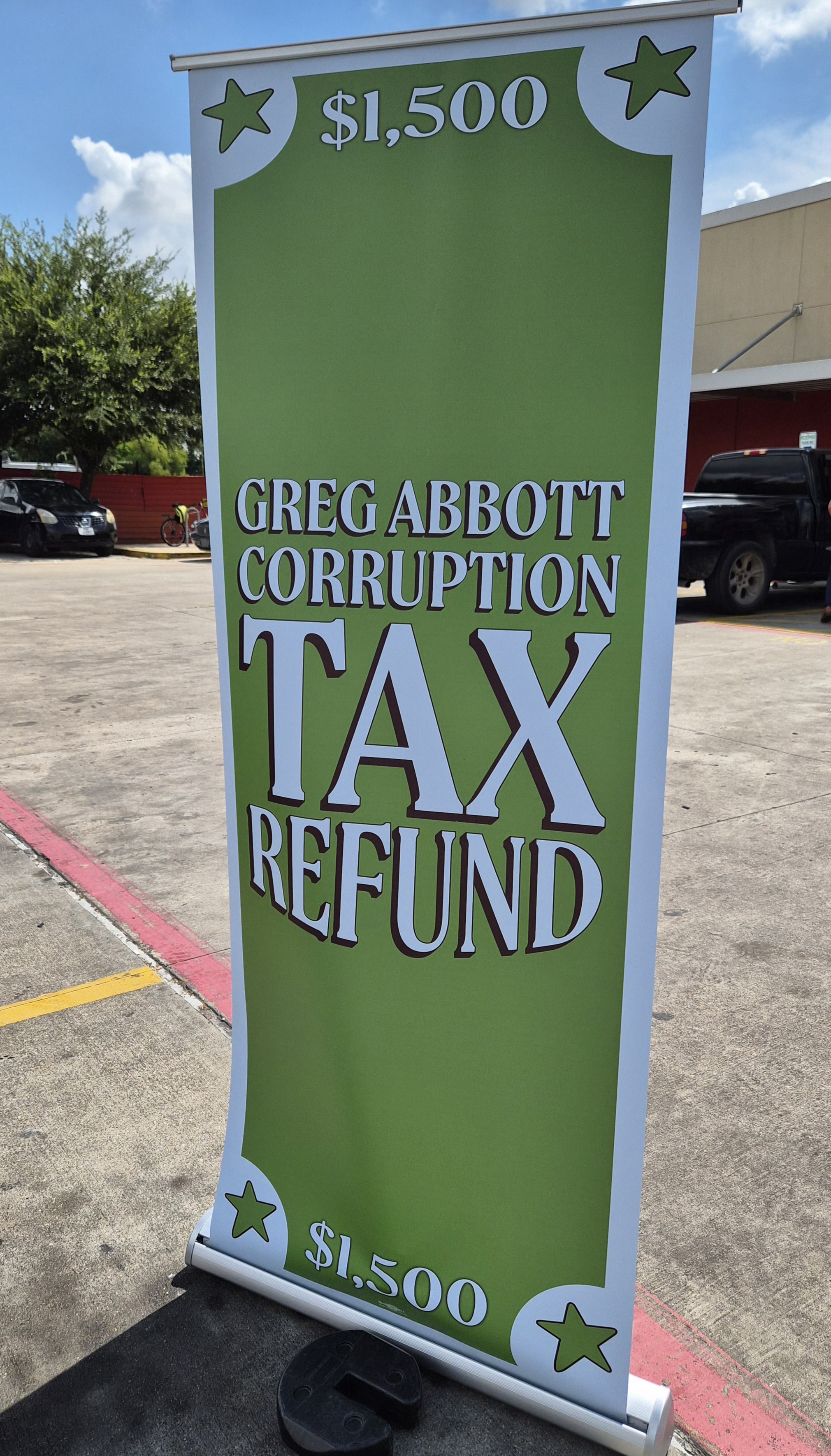
Hinojosa said her proposal would provide immediate relief by putting $1,500 directly into the hands of every Texas household. The funding, she said, would come from the Texas Economic Stabilization Fund, commonly known as the Rainy Day Fund. The Economic Stabilization Fund was created after Texas voters approved a constitutional amendment in November 1988 following the severe oil price collapse and recession of the mid-1980s. The fund became effective Sept. 1, 1989, and was designed to help the state weather economic downturns and unexpected budget shortfalls by saving excess revenue generated largely from oil and gas production. With a balance of approximately $27 billion, the Rainy Day Fund is the largest state reserve account in the nation. Hinojosa argued that the reserve has grown well beyond what is necessary while many Texans continue to struggle with paying for groceries, utilities and other household expenses.
She said money that could have been invested in public education remains in the Rainy Day Fund because additional school funding was not approved during the 2023 legislative session. Hinojosa argued that Governor Greg Abbott withheld education funding while pushing lawmakers to approve a private school voucher program.
During Tuesday’s press event, Hinojosa criticized what she described as a broken state government, saying Texans work harder than the national average, yet continue to struggle to afford basic necessities. She pointed to electricity shutoffs, rising household costs and food insecurity as evidence that many families are being left behind despite the state's strong financial position.
She also pointed to Abbott's awarding of no-bid state contracts to political donors, referring to what she called a "Greg Abbott corruption tax," which she argued has contributed to higher costs for Texans.
The debate over public education funding and school vouchers has remained one of the defining political issues in Texas over the past several years. Abbott made passage of an education voucher program one of his top legislative priorities after voucher legislation failed during the 2023 regular session. The effort received significant financial backing from national donors, including Pennsylvania investor Jeff Yass, a Republican megadonor whose contributions supporting Abbott and pro-voucher candidates have been reported as the largest individual political donations in Texas history. Campaign finance records show Yass contributed millions to Abbott and political committees supporting candidates who favored education savings accounts. After the voucher proposal failed in 2023, Yass continued investing in Texas races during the 2024 election cycle, supporting efforts to unseat Republican House members who opposed the legislation. The voucher program was ultimately approved by the Legislature in 2025.
Critics of the legislation have argued that wealthy out-of-state donors gained outsized influence over Texas education policy and that billions of dollars in additional public school funding were delayed while lawmakers debated the voucher proposal. Supporters of the program have maintained that education savings accounts expand educational opportunities by giving parents more choices for their children's education.
Hinojosa's proposal to distribute $1,500 to every Texas household is expected to become a centerpiece of her economic platform as she campaigns across Texas ahead of the November general election. To learn more about Gina Hinojosa, visit www.ginafortexas.com