
 57
572/10/2026
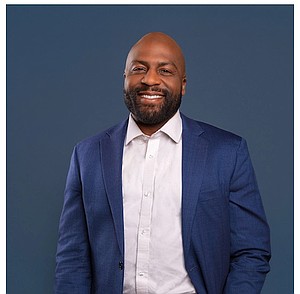
On a busy afternoon in a Richmond coffee shop, I sat down with Robert Nnake, a longtime Fort Bend County resident and candidate for County Commissioner, Precinct 4. Around us, conversations overlapped in multiple languages, laptops hummed, and families filtered in and out—an unintentional snapshot of the county itself. Fort Bend is one of the fastest-growing and most diverse counties in Texas, and the energy in the room reflected both its promise and its pressure points.
“Fort Bend is like the Wild West when it comes to elections,” Nnake said. “There’s no single dominant group organizing outcomes—it’s a free-for-all. That makes campaigning here unique. You can’t just rely on party structures; you have to engage people directly.”
That political reality mirrors Fort Bend’s rapid transformation. Once largely suburban and semi-rural, the county has become a regional hub where longtime residents, new homeowners, immigrants, and young families are all competing for space, services, and stability. Growth has brought opportunity—but also rising costs, strained infrastructure, and a growing sense among some residents that government has not kept pace.
Nnake’s campaign positions him as a candidate who understands that tension because he has worked inside local government during moments of crisis and rapid change.
From Crisis Response to Community Systems
Nnake recently serves in the Harris County Judge's office, where he managed community relations, coordinatesd emergency responses, and oversaw initiatives designed to connect residents with county services. The role placed him at the intersection of policy and people—often when stakes have been high.
“I’ve learned that government works best when it’s results-driven,” Nnake said. “People don’t care which department handles what. They just want their problem fixed.”
That experience informs his vision for the Fort Bend County Commissioner’s office. Rather than a siloed bureaucratic structure, Nnake wants the office to function as a centralized hub—what he describes as a “clearinghouse”—for constituent concerns ranging from flooding and road repairs to permits and parks.
“If someone calls about drainage, they shouldn’t be bounced around,” he said. “They should feel like government is accessible, accountable, and actually working for them.”
Property Taxes, Affordability, and Economic Balance
One of the most consistent concerns Nnake hears from residents is property taxes. In Fort Bend County, where public services rely heavily on residential property taxes, rising home values have translated into higher bills—especially painful for long-term homeowners on fixed or modest incomes.
“This trajectory isn’t sustainable for families,” Nnake said. “People shouldn’t be priced out of the communities they helped build.”
Rather than focusing solely on tax rates, Nnake frames the issue as a structural imbalance. His approach centers on diversifying the county’s revenue base so homeowners are not carrying a disproportionate share of the cost of growth.
His proposals include actively recruiting small businesses and startups, reimagining underused commercial properties as shared workspaces and incubators, and pairing tax incentives with workforce development and apprenticeship programs.
“If we do this right,” he said, “we create jobs, grow the tax base responsibly, and relieve pressure on homeowners—all at the same time.”
Families, Childcare, and Workforce Participation
Nnake also ties affordability to quality of life, particularly for working families. He points to childcare as both an economic and equity issue.
“People want to work, go back to school, or start businesses,” he said. “But childcare becomes the barrier. That hurts families and the local economy.”
He supports targeted tax incentives and subsidies for childcare providers, especially in areas with limited access. By strengthening childcare infrastructure, Nnake argues, the county can increase workforce participation while supporting early childhood development.
“This is about removing friction from people’s lives,” he said. “When families are stable, communities are stronger.”
Infrastructure, Flooding, and Responsible Growth
Precinct 4 has seen intense development in recent years, often without corresponding upgrades to roads, traffic systems, and drainage. Flooding remains a persistent concern, particularly as climate events grow more severe.
Nnake is critical of planning processes that treat roads, housing, parks, and commercial development as separate conversations.
“Growth can’t be reactive,” he said. “We have to plan holistically.”
His infrastructure vision includes stronger flood mitigation requirements—such as deeper retention ponds and improved grading—as well as closer coordination between county, city, and state agencies to ensure infrastructure investments keep pace with development.
“Growth isn’t just about building more houses,” Nnake said. “It’s about building communities where people feel safe, connected, and supported.”
Community Cohesion as Governance
What most clearly distinguishes Nnake’s campaign, however, is his emphasis on community cohesion—not as rhetoric, but as a governing principle.
He has spent time meeting residents in faith spaces and community centers, including churches, mosques, and cultural organizations. Those conversations, he said, reveal a shared sentiment across communities: many people feel unseen and unsupported, particularly in moments of political tension or social fear.
“People need to know their leaders have their backs,” Nnake said. “Sometimes that’s as simple as showing up and saying, ‘You belong here.’”
He recalled a conversation with a Catholic priest who spoke about the quiet power elected officials hold when they publicly affirm safety and dignity—whether by standing against unnecessary enforcement actions or by clearly articulating county values.
“That kind of leadership doesn’t escalate conflict,” Nnake said. “It lowers the temperature.”
His long-term goal is a Fort Bend County where diversity is not treated as a political issue, but as a fact of daily life—something acknowledged without spectacle.
“Food, traditions, language—that’s just life here,” he said. “Not something exotic. Not something threatening. That’s our strength.”
From my perspective, that framing matters. Nnake consistently approaches policy through the lens of connection—how systems either pull people together or push them apart. His campaign reflects a belief that effective governance starts with trust, and that trust is built by listening, showing up, and inviting residents into decision-making rather than governing over them.
A Vision Rooted in Belonging
Ultimately, Nnake’s campaign is about managing growth without losing community. He envisions a Precinct 4 where property taxes are manageable, infrastructure is thoughtfully planned, families have access to childcare, and economic development benefits residents—not just developers.
“Fort Bend gave my parents a chance to build a better life,” he said. “I want to make sure this county continues to do that—for everyone.”
As Fort Bend County continues to evolve, Robert Nnake is presenting a vision that blends pragmatic policy with a deeper commitment to belonging. It’s an approach shaped by public service, grounded in community engagement, and focused on ensuring that growth does not come at the expense of connection.
Learn more about Robert Nnake here.