
 57
574/30/2026
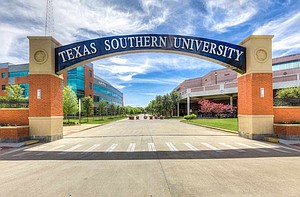
Texas Southern University has joined fellow Historically Black Colleges and Universities in Washington, D.C., for the official launch of the Association of HBCU Research Institutions (AHRI), a new national collaboration aimed at expanding research capacity, increasing federal funding competitiveness, and strengthening the national impact of HBCU-led research.
The alliance brings together high-research and very high-research HBCUs focused on accelerating institutional growth, improving research infrastructure, and advancing a shared strategy for academic and research excellence. For Texas Southern University, participation in AHRI aligns closely with its long-term goal of achieving Carnegie R1 status, the highest research classification for universities in the United States.
Founded in 1927, Texas Southern University is one of the nation’s largest historically Black universities and a major public institution in Houston. Located near the Texas Medical Center, the university serves more than 8,000 students across undergraduate, graduate, and professional programs, including its law school, pharmacy school, and graduate programs in education, public affairs, and science and technology.
Currently designated as a Carnegie R2 doctoral university, Texas Southern has steadily expanded its research enterprise under the leadership of President J.W. Crawford III. University officials view AHRI as a strategic catalyst in strengthening research operations and positioning the institution for national competitiveness.
Texas Southern is also a member of the Texas Medical Center, the world’s largest medical complex, which includes 54 leading institutions. Its research portfolio spans biomedical and public health sciences, STEM innovation, technology transfer, quantum computing, environmental justice, social behavioral research, randomized clinical trials, workforce development, and urban solutions.
One of the university’s most significant recent milestones is a $21.5 million grant from the National Institutes of Health, which supports Texas Southern’s expanding leadership in biomedical and health research. University leaders say the funding strengthens scientific discovery, addresses urgent public health challenges, and enhances student preparation through hands-on research training and mentorship.
Its nationally recognized research centers include the Bullard Center for Environmental and Climate Justice, the Center for Biomedical Minority Health Research, the Center for Transportation Training and Research, the NASA University Research Center Core Laboratories, and the High Performance Computing Center. These centers support interdisciplinary research while embedding students in research-driven learning environments that connect academic study with real-world problem-solving.
Texas Southern’s research mission is also reinforced by its Carnegie Community Engagement Classification, a national designation recognizing the university’s commitment to public service, community partnerships, and scholarship that directly improves lives in Houston and beyond. Much of that work focuses on public health, environmental justice, education, and economic mobility.
University leadership says AHRI provides a framework for collaboration among HBCUs seeking to strengthen their research missions while improving faculty success, student opportunities, and national visibility.
Texas Southern also acknowledged the leadership of Wayne Frederick of Howard University, David Wilson of Morgan State University, and Tomikia P. LeGrande of Prairie View A&M University, along with former Prairie View president Ruth Simmons, for helping shape the alliance and bringing institutions together around a shared vision for HBCU research advancement.
The university also recognized the support of the Association of American Universities, whose partnership helped strengthen the collaboration and reflected growing national recognition of the role HBCUs play in advancing U.S. research competitiveness and innovation.
Following the AHRI launch and inaugural symposium, Texas Southern plans to continue advancing its long-term research strategy, including the development of a focused three-year plan designed to accelerate research growth and strengthen its pathway to Carnegie R1 designation.
As the university approaches its centennial in 2027, officials say the goal is to build a stronger research future that reflects Texas Southern’s historic mission and expanding role as one of the nation’s leading urban research institutions.